
Visiting a factory
You get two curated hours. Spending them trying to audit is the commonest way to waste a flight.
Published · 9 min read · By YCP Team
On this page
The wall of certificates is the least informative thing in the building
Almost every visit opens in a meeting room with framed certificates on the wall, and almost every visitor treats them as the credential half of the trip. They are the weakest evidence available and it is worth knowing precisely why.
Take the one you will see most often. ISO 9001 is a quality MANAGEMENT SYSTEM standard, not a product standard. ISO's own description is unambiguous: its requirements define how to establish, implement, maintain and continually improve a quality management system. It says nothing about whether the thing in the box is any good, and it was never meant to.
Certification to it is also optional. ISO says so directly — companies implementing the standard can choose whether to go through a certification process, and there is no requirement to. So an uncertified factory is not thereby a worse factory, and a certified one has demonstrated that it maintains a system, which is a real thing and a different thing.
And there is a naming rule that doubles as a tell. ISO's own guidance is that a certification claim should carry the full reference — *"certified to ISO 9001:2015"*, not just *"certified to ISO 9001"*. A plaque or a letterhead with no year on it, no issuing certification body, no scope and no site address is not making a statement ISO recognises. That does not make it dishonest; it makes it uncheckable, which for your purposes is the same thing.
Diary date, and it is imminent: ISO 9001:2015 is formally marked for revision and ISO states that the revised edition is expected in September 2026, with a transition period for existing certificate holders. There is also an amendment, ISO 9001:2015/Amd 1:2024, covering climate action changes. Within weeks of that publication every 2015 certificate on every wall is in transition — so a certificate is about to become a date-sensitive document in a way it has not been for a decade.
What to do with the wall, then: photograph it, and afterwards ask for the certificate itself rather than the frame — the issuing body, the certificate number, the scope, the site address it covers, and the expiry. Those five things are checkable with the body that issued it. The frame is not.
What to look at while you are walking
You will be walked through quickly. A short list you can actually hold in your head beats a long one you cannot, so this is deliberately short rather than exhaustive.
Work in progress, and where it is piling up. A factory's bottleneck is visible as a heap. Look for where material is waiting rather than where it is moving — that is the constraint, and it is what will decide your lead time whatever the quotation says.
The rework bench. Almost every factory has one, and its size is the most honest quality signal in the building. A small one is normal and a large busy one is a fact nobody will volunteer. Ask what is on it today, not in general.
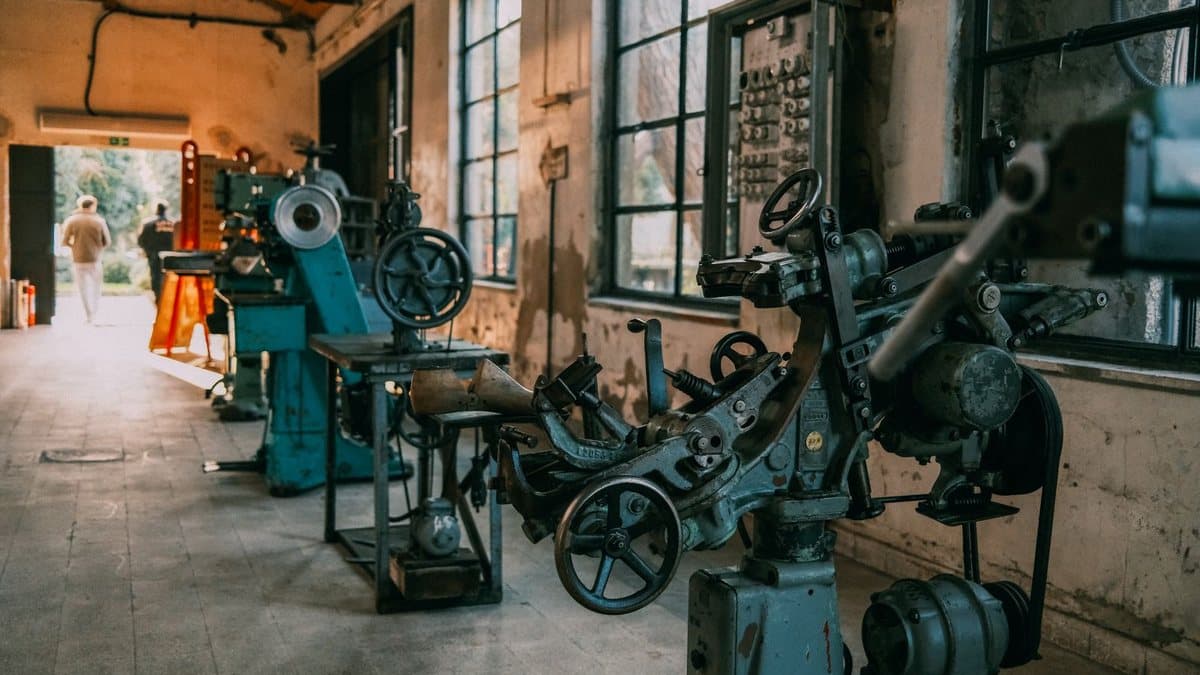
Whether the machines are running. A machine with tooling in it, swarf underneath it and a worn operating position has been used this week. A very clean machine in a very clean corner may be a machine that is not used, and it photographs beautifully.
The incoming goods area. This is where the supply chain behind your supplier becomes visible: what arrives, in whose boxes, and whether anything is checked before it goes into stock. A factory with no incoming check is a factory that will discover a bad component in your product rather than in its store.
Where finished goods sit, and for how long. Boxes with old dates on them tell you about somebody's cancelled order or somebody's rejected batch, which is a conversation worth having.
And the one request that is worth the whole visit: ask to see a job that is not yours. A line running someone else's order, right now, shows you the normal state of the place rather than the prepared one. A refusal is not proof of anything — confidentiality is a real reason — but the manner of the refusal is informative, and a factory that is proud of its work usually wants to show it.
The people questions matter more than the machine ones
Machines can be photographed and rented. Relationships cannot, and they decide what happens the week something goes wrong.
Is the person you have been emailing in the room, and do they speak? If your contact is silent while somebody else answers everything, you have learned who actually holds your account — and it is worth knowing before a problem rather than during one.
Ask who decides. Who signs off a specification change, who authorises rework at the factory's cost, who can stop a shipment. In a smaller factory the answer is often one person and you may be standing next to them; in a larger one there is a process, and knowing which of the two you are dealing with changes how you escalate.
Ask what happens if. *If a component arrives late, what do you do?* *If the first article fails, who calls me and when?* You are not testing the answer for correctness — you are finding out whether the question has ever come up, and a factory that has a practised answer has had the problem and dealt with it.
And watch how the floor treats the manager walking you round. It is not a scientific measure of anything, and it is the sort of thing you will remember when a schedule slips.
What to take away, and what a video call gets instead
The most valuable output of a visit is not an opinion, it is a record. Photographs of the specific line, the specific machines, the incoming area and the finished-goods area, with the date on them, plus a short written note of who you met and what they said. Opinions fade and get revised by whatever happened last; a dated photograph of the actual line is a baseline you can compare against on the next visit and quote back when something changes.
Write it up the same evening. Not for anyone else — for the version of you that will be trying to remember, six months later, whether the second floor existed and whether the moulding was in-house.
And be honest about the alternative, because it is a good one. A live video walk from reception to the line that would run your order, in one unbroken take, gets a surprising proportion of what a visit gets, costs nothing, and can be repeated. It is not equivalent — it cannot tell you how loud or how hot the floor is, what the place smells like, whether the floor above exists, or how people behave when the phone is not pointed at them — but a buyer who cannot fly should do the video call rather than nothing at all.
No printable checklist is published on this page. A list long enough to be thorough cannot be used while walking, and the thorough version already exists as a different artefact: an audit, done by a trained person against a scheme, over days. What is on this page is deliberately short enough to remember at the top of a staircase.
Questions people actually ask
What should I look for when visiting a Chinese factory?
A short list you can hold in your head while walking: where work in progress is piling up, because that is the bottleneck that decides your lead time; the rework bench, whose size is the most honest quality signal in the building; whether machines are actually running, which shows as tooling in them and swarf underneath; the incoming goods area, which is where your supplier's own supply chain becomes visible; and how long finished goods have been sitting. Then ask to see a job that is not yours.
Can a factory visit tell me if a supplier is genuine?
It can establish that a capability physically exists at the scale described, which is worth a lot. It cannot reliably detect deception, and any guide that says otherwise is selling a trip. A visit is a curated couple of hours; an audit is a trained person working to a scheme over days, and they are not substitutes.
Does ISO 9001 certification mean the products are good?
No, and it was never meant to. ISO 9001 is a quality management system standard — its requirements define how to establish, implement, maintain and improve a management system, not what comes out of the box. ISO also states that certification to it is optional, so an uncertified factory is not thereby worse. What matters is the certificate itself rather than the frame: the issuing body, the number, the scope, the site it covers, and the expiry.
How do I check a factory's certificates?
Photograph the wall, then ask for the certificate rather than the frame and check five things with the body that issued it: issuing certification body, certificate number, scope, site address covered, and expiry date. ISO's own guidance is that a claim should carry the full reference — "certified to ISO 9001:2015", not "certified to ISO 9001" — so a plaque with no year, no body, no scope and no site is uncheckable, whether or not it is honest.
Is ISO 9001 changing?
Yes, and soon. ISO 9001:2015 is formally marked for revision and ISO states that the revised edition is expected in September 2026, with a transition period for existing certificate holders. There is also an amendment, ISO 9001:2015/Amd 1:2024, covering climate action changes. Within weeks of publication every 2015 certificate is in transition, so the year on a certificate is about to matter more than it has for a decade.
Is a video call as good as visiting?
Not equivalent, but far better than nothing and repeatable. A single unbroken walk from reception to the line that would run your order gets a surprising proportion of it at no cost. What it cannot give you is how loud and hot the floor is, what the place smells like, whether the floor above exists, and how people behave when a phone is not pointed at them.