
China plus one, honestly
Move the final assembly and keep buying the parts in Guangdong, and you have added a border rather than removed a dependency.
Published · 10 min read · By YCP Team
On this page
What you are actually buying, and what it costs
Strip the phrase back and the purchase is insurance. You are buying a second way to keep supplying your customers if the first one becomes unavailable — for a policy reason, a logistics reason, a labour reason or simply because one factory burnt down.
It is almost never a cost saving in the first year, and pretending otherwise is how these projects get approved and then quietly abandoned. A second country means a second qualification cycle, a second set of first articles, a second inspection regime, a second freight route, a second set of documents, and a second relationship being built from zero by people who already have a job.
And there is a cost nobody budgets: your own attention. Two suppliers making the same thing is more than twice the management of one, because you now also own the difference between them — two revisions of the same drawing, two sets of process deviations, and a support case where the answer starts with *"which one is it?"*
There is also a price effect at the supplier you are leaving. Volume moved out of a Chinese factory is volume it no longer prices on, and the quotation for what stays can move. That is not spite; it is the same arithmetic that gave you the price in the first place, and it should be in the model before you split the volume rather than discovered afterwards.
No country-by-country cost comparison is published here. It moves, it is product-specific, and a table of that kind is read as a ranking no matter how it is captioned.
The dependency you probably did not move
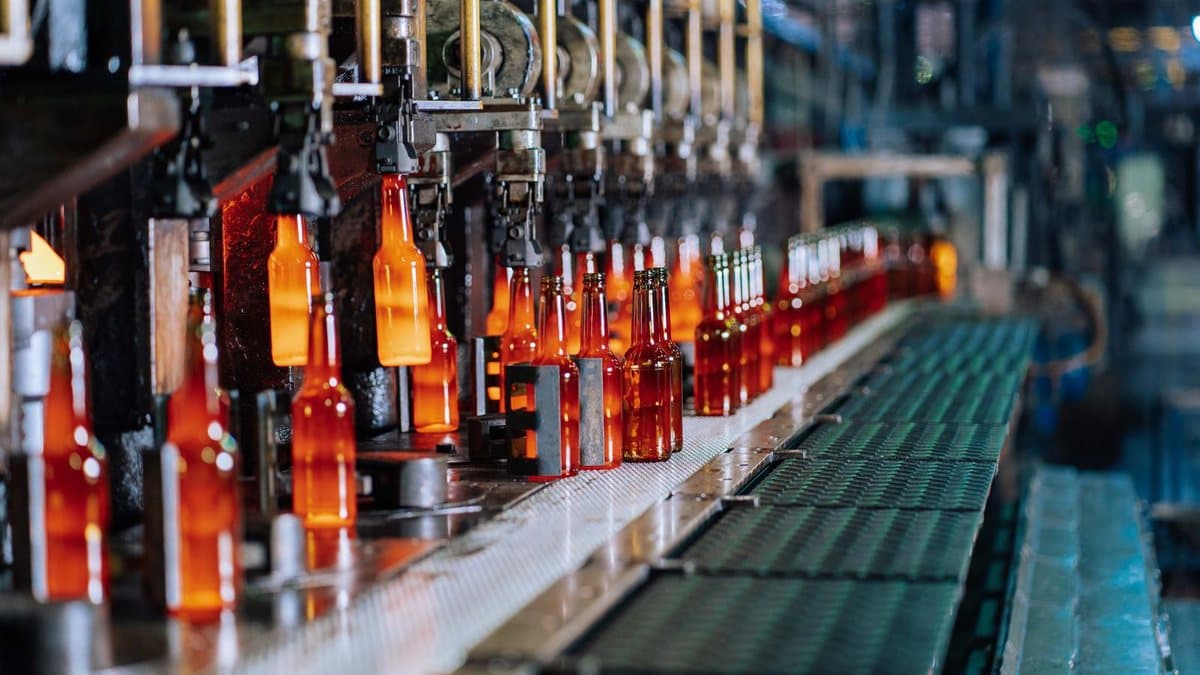
Here is the version of the strategy that fails quietly. Final assembly moves to a second country. The housings, the boards, the connectors, the cells, the packaging and the tooling are still bought from the same Chinese suppliers as before, and shipped in. The border has moved. The dependency has not.
Test it on paper before you test it with money: take your bill of materials and mark, line by line, where each item is actually made. Not where it is invoiced from — where it is made. Most people who do this exercise for the first time are surprised by how far down the list they get before the country changes.
Then mark the tooling. A tool that lives in a Chinese mould shop is a dependency wherever the assembly happens, and a tool that can physically be moved is not the same as a tool that will run correctly in a different press with a different operator. That question has its own page and it is the one people ask last.
And mark the people. New plants in a plus-one country are frequently set up, staffed and run by the same Chinese manufacturers, which is a perfectly legitimate arrangement and is often the reason the quality is acceptable so quickly. But it does mean that if your reason for moving was exposure to one company rather than to one country, you may not have moved at all.
None of this makes the move wrong. It makes it measurable: the honest question is not "have we diversified?" but "which specific risk did this remove, and what proportion of the value still comes from where it came from before?"
Origin is a legal test — and you can ask the answer in advance
This is the part most plus-one projects get to last and should get to first, because everything else depends on it.
Origin is not the address on the carton. The WTO Agreement on Rules of Origin sets out the principle that a good originates either in the country where it was wholly obtained, or, where more than one country is involved in its production, in the country where the last substantial transformation has been carried out.
"Substantial transformation" is then expressed through one of three kinds of rule, and the Agreement requires each to be stated precisely: a change of tariff classification — the finished good sits under a different heading or subheading than the inputs did; an ad valorem percentage — with the method of calculation specified in the rule itself; or a named manufacturing or processing operation that confers origin. No general percentage is published here, and there is a structural reason rather than a cautious one: the Agreement obliges the method to be specified per rule and per product, so a single figure quoted for "China plus one" is not merely unsourced, it is the wrong shape of answer.
And one good can have two origins at once, for two different purposes. The Agreement separates non-preferential rules — used for most-favoured-nation treatment, anti-dumping and countervailing duties, safeguards and origin marking — from preferential rules, which decide whether a good qualifies under a particular trade agreement. A product can satisfy a free trade agreement's rule and still be non-preferentially of a different origin for a duty that is not part of that agreement. Which rules apply is decided by your destination, not by your factory.
Now the mechanism nobody uses. Under the same Agreement, members must issue an assessment of the origin they would accord to a good on request from *"an exporter, importer or any person with a justifiable cause"*, within 150 days of a complete request, and that assessment "shall remain valid for three years" provided the facts and the rules stay comparable. Requests may be made before trade in the good begins. So the single most expensive uncertainty in a plus-one project is answerable in writing, in advance, by the authority that will actually decide it. Ask before you build, not after your first container is held.
The ecosystem is the thing that is hard to copy
What a mature manufacturing region sells you is not labour, it is proximity. The plating shop is twenty minutes away, the mould repair happens overnight, the connector you forgot to order is on a counter this afternoon, and the engineer who has built this exact product forty times is available next week.
A new location has fewer of those, and their absence shows up as time rather than as price. A component that is one day away in one country is three weeks away in another, and three weeks appears in your schedule rather than in your quotation. That is the single most common reason a plus-one line is slower for its first year, and it is not a criticism of the people running it.
So choose which product moves. The best first candidate is simple, stable, not tooling-heavy, with a short bill of materials and few specialist processes. The worst is your newest, most complex product with a tool that has just been proved — that one wants the ecosystem, and moving it is how a plus-one project acquires a reputation for producing defects.
And run both for a while. A cutover is a decision to find out about the new line's problems while having no fallback. Overlapping is more expensive and it is the version that works.
The alternative most buyers should consider first
Be precise about the risk you are actually carrying, because for most buyers it is single-FACTORY risk rather than single-COUNTRY risk. One workshop, one owner, one tool in one building, one relationship. That risk is not addressed by a second country; it is addressed by a second supplier.
And a second supplier inside China is faster, cheaper and easier to qualify — the same language, the same standards, the same freight route, the same documents, and often a factory that can start from your existing drawings. Two suppliers in two different provinces answers "what if the building burns down", "what if the owner retires" and "what if they get a bigger customer" completely.
What it does not answer is policy. If the risk you are hedging is a trade measure aimed at Chinese origin, a second Chinese supplier is not a hedge at all — and that is precisely the case where origin, and the advance assessment above, becomes the whole project rather than a detail in it.
So the honest sequence is: name the risk first, in one sentence. If the sentence contains the word "factory", dual-source in China. If it contains the word "country", you are doing a plus-one project and the first thing to buy is an origin assessment, not a plane ticket.
And no country is recommended on this page. The right answer depends on your product, your destination, your tooling and your volume, and a guide that names a winner is describing its own last conversation rather than your situation.
Questions people actually ask
What is a China plus one strategy?
Keeping production in China while adding a second country, so that supply survives a disruption in either. It is a risk decision rather than a cost decision — it is rarely cheaper in the first year — and it only does what it was bought for if the origin of the goods actually moves, which is a legal test rather than an address.
Does moving assembly to Vietnam change the country of origin?
Not automatically. Under the WTO Agreement on Rules of Origin, a good originates where it was wholly obtained, or, where more than one country was involved, in the country where the last substantial transformation was carried out. Whether your assembly meets that is decided by a specific rule for your specific product and your specific destination — expressed as a change of tariff classification, an ad valorem percentage with a stated calculation method, or a named process.
Can I find out my origin before I commit?
Yes, and almost nobody does. The same Agreement requires members to issue an assessment of the origin they would accord to a good on the request of an exporter, importer or any person with a justifiable cause, no later than 150 days after a complete request, and provides that the assessment shall remain valid for three years while the facts stay comparable. Requests can be made before trade in the good begins. Ask before you build the line.
What percentage of value has to be added to change origin?
No general figure exists, and quoting one would be the wrong shape of answer rather than merely unsourced. The Agreement requires that where an ad valorem percentage criterion is used, the method of calculating it is specified in the rule itself — so the threshold and the calculation are properties of a particular rule for a particular product in a particular destination, not of "China plus one".
Is China plus one cheaper?
Usually not in the first year. A second country means a second qualification cycle, a second inspection regime, a second freight route, a second set of documents and a relationship built from zero — plus your own management attention, which is more than twice the load because you now own the differences between the two. And volume moved out of your Chinese factory is volume it no longer prices on, so the quotation for what stays can move.
Should I dual-source in China instead?
For many buyers, yes, and it is worth naming the risk in one sentence first. If the sentence contains "factory" — one workshop, one owner, one tool in one building — a second Chinese supplier answers it faster, cheaper and with the same language, standards and documents. If the sentence contains "country", because the risk is a trade measure aimed at Chinese origin, then a second Chinese supplier is not a hedge at all and origin becomes the whole project.