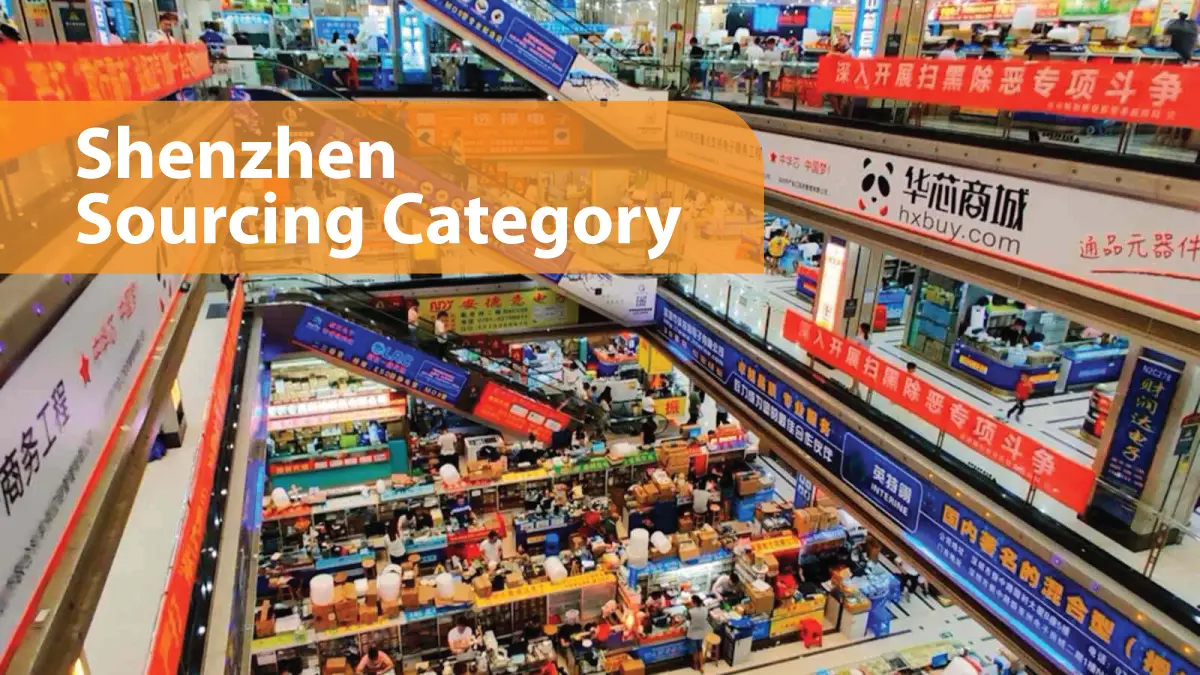
Shenzhen is often dubbed the world’s most comprehensive supply hub for hardware and beyond. In fact, about 90% of the world’s electronics – from smartphones to drones, and even toys and TVs – come out of Shenzhen’s vast manufacturing ecosystem. But it’s not just gadgets; the city’s factories also churn out a huge range of consumer goods, from appliances and e-bikes to fashion accessories and packaging materials. A Shenzhen sourcing agent leverages this all-in-one ecosystem to map out the right sourcing game plan for any product category.
They know which specialized districts and supplier tiers to tap (for example, packaging producers cluster in Bao’an and Longgang districts), can identify factories that meet your MOQ requirements, and ensure compliance with relevant standards (whether it’s CE marking for electronics or material certifications for textiles). The result? Faster sampling cycles, more reliable quality control, and a lower landed cost achieved through on-the-ground validation and consolidated shipping. In the sections below, we’ll explore how a Shenzhen sourcing agent adds value across five key categories – from high-tech electronics to home furnishings – and how they help speed up product validation without compromising on quality or cost.
What to source: Printed circuit boards (PCB/PCBA), semiconductors and modules, sensors, connectors, cables, batteries, chargers, power supplies, single-board computers (e.g. Arduino/Raspberry Pi), smart home/IoT devices, wearables, audio components, and displays (LCD/OLED panels).
Where Shenzhen shines: This city is ground zero for electronics manufacturing – often called the “Silicon Valley of Hardware”. The concentration of component suppliers and engineering talent means unparalleled speed in prototyping and pilot production. Companies in Shenzhen can iterate designs much faster than elsewhere thanks to immediate access to every imaginable component. Need to swap an IC or add a new sensor? A quick trip to Huaqiangbei (the famous electronics market) will turn up virtually any part – circuit boards, LEDs, microchips, oscillators – on the spot. This rapid turn-around on design tweaks and small-batch builds (EVT/DVT/PVT prototypes) is something no other supply hub can match.
Agent value: A seasoned Shenzhen sourcing agent acts as your local R&D concierge in this fast-paced ecosystem. They can source multiple cross-quotes for each component to ensure you’re getting the best pricing and up-to-date tech. They also introduce you to the right OEM assembly partners or firmware specialists if your project needs them (for instance, matching you with a Bluetooth module OEM that can also tweak firmware). When it comes to quality, the agent will set up Acceptable Quality Limit (AQL) sampling plans to catch any issues early. Chinese manufacturers commonly use AQL-based inspections – meaning only a statistically determined sample of units is checked – so your agent ensures those samples get put through reliability tests (thermal stress, drop tests, basic IP water resistance checks, etc.) before anything ships. By locally verifying that your boards boot up, batteries hold a charge, and devices survive a few drops, the agent safeguards you from costly surprises in mass production.
What to source: Phone and tablet accessories (cases, chargers, power banks), smart gadgets and small appliances, personal e-mobility devices (electric scooters, e-bike kits), gaming peripherals, beauty and personal care devices, kitchen gadgets, stationery and craft supplies, pet accessories, and other everyday retail products.
Where Shenzhen shines: Beyond electronics, Shenzhen is a powerhouse for ODM consumer products. Factories here often have ready-to-go catalogs of privately developed items (from Bluetooth earphones to kitchen tools) that overseas buyers can brand as their own. Using an Original Design Manufacturer is the fastest and cheapest way to launch a “me-too” product – you simply slap your logo on an existing design. The region’s ability to scale production while customizing details is impressive. Need a different color or a slight tweak to the design? Shenzhen makers can tweak molds or software quickly, then white-label the product for you with your branding. Moreover, the city’s advanced packaging and printing services mean you can get high-end retail packaging customized in parallel. In short, Shenzhen’s consumer-product supply chain offers incredible speed: you can pick an item from an ODM’s catalog, request a few cosmetic changes, and have a production sample with your branding and custom packaging in hand within weeks – a pace virtually impossible elsewhere.
Agent value: A Shenzhen sourcing agent becomes your merchandise curator and quality gatekeeper in the realm of consumer goods. First, they’ll sift through countless factory catalogs to shortlist the best candidates that meet your style, feature, and price criteria – saving you from being overwhelmed by options. Once you select a design, the agent arranges sample inspections to ensure “cosmetic grade” quality (after all, consumer products need to look flawless). They’ll check that finishes are smooth, colors match your expectations, and that the item feels durable and well-built. If it’s an electronic gadget or appliance, the agent will also verify any safety pre-compliance needs – for example, confirming that a device either has necessary CE/FCC certifications or can be tested for them. They coordinate things like electrical safety tests or EMC screening early, so you don’t end up with a shipment you can’t legally sell. Finally, your agent can bundle packaging and accessories for you: ensuring that the product, its user manual, charging cables, and any add-ons all come together in one attractive package. By managing this bundling and final QC, the agent delivers a shelf-ready product that meets both your brand standards and regulatory requirements.
What to source: Custom tooling (injection molds, die casts), CNC-machined parts and sheet metal fabrications, aluminum extrusions, plastic resins and molded parts, fasteners and fittings, custom enclosures (metal or plastic housings), heat sinks and thermal management components, cables and wire harnesses for equipment.
Where it shines: Shenzhen and its surrounding cities (like Dongguan) form the heart of China’s precision manufacturing for these inputs. One major advantage is Design for Manufacturing (DFM) support – local suppliers will proactively suggest tweaks to your CAD models to improve moldability or yield. Tooling lead times are remarkably short here: some mold makers can produce prototype injection molds in 10–15 days, and even complex production tooling in a month or less, thanks to efficient CNC and EDM capabilities. This means you can go from a product design to trial parts in hand in a fraction of the time it might take elsewhere. Equally important, once you scale up production, Shenzhen’s cost structure shines – factories operate at such scale and efficiency that your per-part pricing drops dramatically. The city’s mature ecosystem lets manufacturers mass-produce with excellent economies of scale, keeping unit costs very low without sacrificing quality. In practice, that means whether you need 100 precision gears or 100,000, the region can deliver quickly and at highly competitive cost.
Agent value: In the industrial and B2B sourcing arena, a Shenzhen sourcing agent plays a critical technical liaison role. They’ll organize DFM audits with your supplier – essentially, design reviews to ensure your specifications are feasible and optimized for local production methods. This might include reviewing tolerances on drawings, suggesting material substitutions, or flagging any design features that could cause quality issues. Once tooling or production is underway, the agent implements tolerance control plans – for instance, arranging for first-article inspections where critical dimensions are measured on a Coordinate Measuring Machine before full production. They can also coordinate a Production Part Approval Process (PPAP) style approach, similar to automotive standards, where the factory must submit sample parts plus documentation proving they hit all specs before you green-light mass production. This level of upfront validation greatly reduces the risk of surprises later. Additionally, the agent keeps an eye on surface finish and treatment standards. Whether it’s an anodized aluminum part or a powder-coated enclosure, they’ll make sure the supplier follows your required finish spec (checking for things like coating thickness or color matching). By obtaining sample plaques or finish swatches for approval, the agent ensures the aesthetics and performance (corrosion resistance, etc.) are spot on. In short, your Shenzhen agent acts as the quality engineer on the ground, making sure each nut, bolt, and casing meets your exact needs before it heads your way.
What to source: Custom retail boxes (corrugated mailers, rigid gift boxes), sustainable or eco-friendly packaging options (recycled cardboard, molded pulp inserts), printed manuals and booklets, labels and stickers (product labels, barcodes, QR code stickers), branded merchandise kits or gift sets, point-of-sale displays and signage.
Where it shines: Shenzhen’s packaging industry offers flexibility and finesse. Unlike many regions that demand huge volumes, here you can often get packaging with special customizations at relatively low order quantities – some smaller suppliers will do 500–1,000 units for a simple custom box design, whereas elsewhere you might need to order tens of thousands. At the same time, these printers and box makers deliver high-end finishing techniques on par with any global provider. Spot UV gloss, foil stamping in gold or holographic foil, embossing/debossing, die-cut windows, magnetic closures – you name it, Shenzhen firms can do it, often without exorbitant setup fees. They’re also ahead of the curve on sustainable materials. Thanks to the Pearl River Delta’s integrated supply chain, you can source innovative eco-packaging like bamboo fiber pulp inserts or FSC-certified paper stock easily (nearby provinces like Foshan and Dongguan supply molded pulp, specialty recycled papers, etc. as part of the ecosystem). In practice, this means you have tremendous MOQ flexibility: you could order a few hundred boutique-quality boxes with hot-stamped logos, or scale up to hundreds of thousands of units – all while enjoying fast turnarounds and the latest in green materials.
Agent value: A Shenzhen sourcing agent specializing in packaging becomes your brand’s guardian on the factory floor. They start by optimizing your dielines (the packaging templates) with the manufacturer – ensuring that your artwork fits printing specifications exactly and that material usage is efficient. Before mass printing, the agent gets a proof or prototype box made and does a drop test with it – literally dropping the packaged product from various heights – to verify that your packaging will actually protect the contents. They’ll iterate with the supplier if corners need reinforcement or if an insert needs redesign for better cushioning. During printing, the agent monitors color consistency rigorously. They’ll insist on using standardized Pantone inks or ICC color profiles so that your brand colors come out accurate and uniform across the whole batch. (Pantone spot-color printing is known for its ability to achieve highly consistent color reproduction on all surfaces, and the agent makes sure your logo blue or signature red looks the same on every box). Additionally, the agent can help integrate anti-counterfeit features. Whether it’s arranging security hologram stickers, unique serial QR codes on each unit, or tamper-evident seals, they coordinate these extras so that your packaging not only looks great but also protects your brand. By handling on-site checks for print quality (sharpness of text, correctness of barcodes) and supervising final assembly (putting products, manuals, and accessories into the right packaging), the sourcing agent ensures your customer unboxing experience is flawless.
What to source: Fabrics and textiles (rolls of cotton, polyester, performance blends), garment trims and accessories (zippers, buttons, buckles), finished and semi-finished soft goods (bags, backpacks, protective cases, foam padding or inserts), as well as furniture and home product parts like ergonomic chair components (casters, armrests, mechanisms), adjustable desk frames, and integrated lighting (LED modules for lamps or furniture).
Where it shines: Shenzhen sits in the Pearl River Delta region, which is a major global center for both textiles and light manufacturing. The city itself has a strong fashion production scene – especially known for women’s apparel and fashion accessories – as part of Guangdong province’s huge textile industry. This means a Shenzhen agent can source high-quality fabrics and sewn goods from the local market (often at Guangzhou fabric markets just a short trip away, or from factories in Shenzhen’s own fashion districts). At the same time, Shenzhen is surrounded by some of China’s top furniture and home-good manufacturing hubs (nearby Dongguan and Foshan, for example, are famous for furniture). The upshot is that mixed-material products are easy to handle here. If you’re developing, say, an office chair with metal legs, foam cushions, and electronic height controls – a Shenzhen sourcing agent can get all those parts from specialized suppliers within the region and ensure they fit together. This ability to source diverse components in one supply chain is ideal for today’s products that blend textiles, plastics, metals, and electronics. Furthermore, the agent can orchestrate kitting and consolidation: they might source metal table frames from one factory and wooden tabletops from another, then have them kitted together in a single flat-pack set ready for your warehouse. Shenzhen’s logistical prowess means even multi-part, multi-vendor products can be bundled efficiently, reducing your freight and handling costs.
Agent value: In this category, a sourcing agent wears many hats – part quality inspector, part assembly tester, part logistics optimizer. For any textiles or soft materials, the agent will arrange fit-for-use testing. For example, if you’re sourcing upholstery fabric or backpack material, they can have a sample put through a Martindale abrasion test to quantify its wear resistance. This ensures that the textile can handle the stress (imagine verifying that an office chair fabric withstands 30,000 rub cycles so it won’t fray in a year). They also coordinate load testing for things like straps, seams, or furniture parts – making sure a bag strap won’t snap at 20kg load, or a desk frame holds the advertised weight without wobbling. Meanwhile, the agent pays close attention to hardware compatibility when multiple suppliers are involved. They’ll test-assemble components from different sources, checking that screw holes align, bolts and nuts match tolerances, and electronic connectors from one part fit the harness from another. This proactive fitting prevents nasty surprises when you try to assemble products overseas. Finally, the agent excels at flat-pack optimization for bulky items like furniture. By designing the packaging and assembly approach for disassembled shipping (knock-down furniture), they can drastically cut your shipping volume and costs. (Flat-packed furniture can reduce freight costs by up to 60% compared to shipping fully assembled pieces.) Your agent will ensure parts are packaged in the most space-efficient manner and include clear instructions/hardware kits for end customers. This not only saves you money but also makes distribution easier. In summary, the agent acts as an integrator – validating materials and components for durability, confirming everything fits together, and optimizing how the final product is packaged for transit.
By now it’s clear that Shenzhen’s sourcing landscape spans virtually every product category, and a skilled agent knows the terrain of each. From testing PCBAs in the lab to dropping boxes to ensure they don’t crush your goods, the Shenzhen sourcing agent’s toolkit is all about fast, front-loaded validation. The key advantage here is speed with assurance: by vetting suppliers, samples, and product quality on-site in China’s most concentrated supply network, you compress the development cycle without taking on extra risk. Whether you’re a hardware startup iterating on a new gadget or a retailer expanding into private-label home goods, leveraging a Shenzhen agent gives you a shortcut to reliable manufacturing.
They make sure that before you scale up an order, every component, material, and process has been checked and is up to standard. This proactive approach, combined with Shenzhen’s legendary manufacturing agility, means you can go from concept to mass production remarkably quickly. In fact, if you’re looking to bring a product to market on a tight timeline, Shenzhen is one of the best places in the world to get it done – and a trusted sourcing partner on the ground is your ticket to unlocking that speed. The category map we’ve outlined – electronics, consumer goods, industrial parts, packaging, and soft goods/furniture – shows the breadth of what’s possible. A Shenzhen sourcing agent helps you navigate each of those sectors like a local, ensuring that what you source is not only cost-effective but also meets your quality and compliance needs right from the start. With their help, you can move forward fast and confidently, knowing the validation work has been done under the hood.
Ready to turn all this insight into action? Your China Partner is here on the ground in Shenzhen to jump-start your sourcing project. Just reach out to us with the product or category you have in mind, and within 72 hours we’ll deliver a tailored shortlist of vetted suppliers – complete with initial quotes and sample availability. Our team will hand-pick factories suited to your target quality, volume, and budget, saving you weeks of research and uncertainty. We’ll even arrange real-time sample inspections or video demos upon request, so you can see the quality for yourself. In three days, you could be reviewing actual product samples and pricing from reliable Shenzhen suppliers.
Why wait? Tap into our Shenzhen network and get the information you need to make a smart sourcing decision – fast. Contact Your China Partner today, and let’s get your project moving with a curated supplier list and samples in hand within 72 hours.
Enjoyed this comprehensive guide? Follow our Facebook page, LinkedIn profile, or Instagram account for more expert insights and practical tips on global sourcing and import success.

Reviewed and originally published by YourChinaPartner on October 24, 2025

Global HQ (Singapore)
24 Sin Ming Lane, #01-100
Singapore 573970
Shenzhen (Regional Office)
深圳市宝安区西乡街道固兴
路V都会1A505-506 (518101)