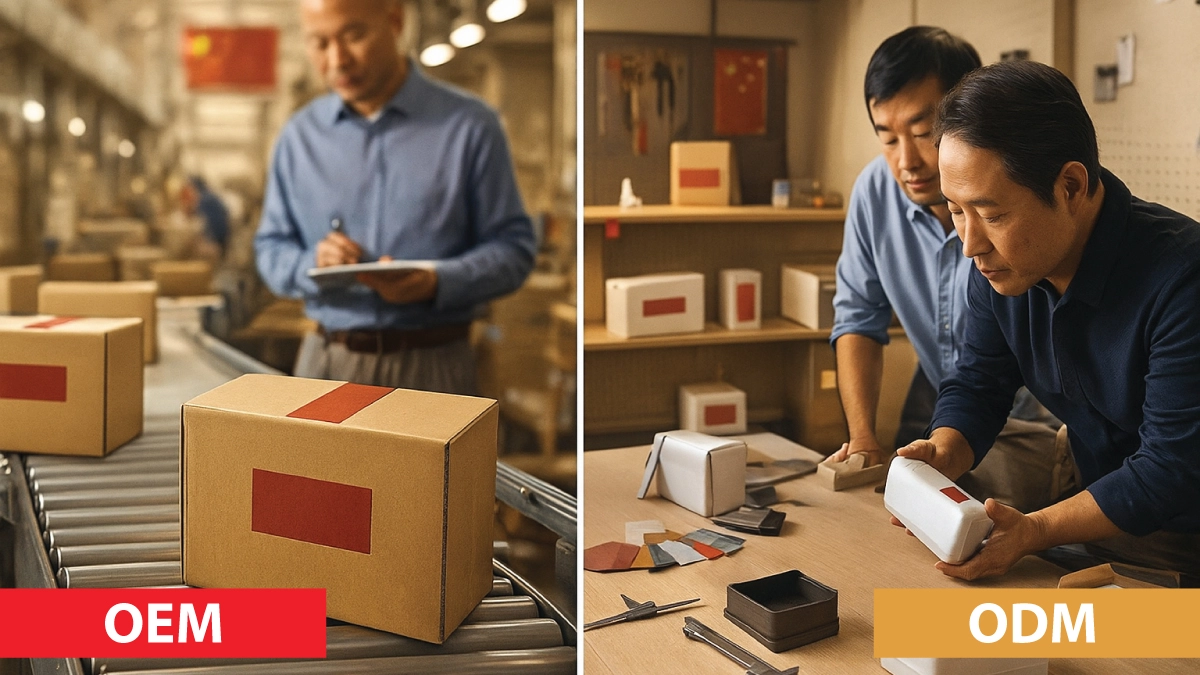
OEM vs ODM manufacturing China – which path is right for your business? If you're planning to produce a product in the world’s manufacturing hub, understanding OEM (Original Equipment Manufacturing) versus ODM (Original Design Manufacturing) is crucial. Choosing the correct model can save you time, money, and protect your intellectual property while helping you avoid costly missteps. YourChinaPartner is a trusted China sourcing company that has guided many businesses through these decisions, giving us first-hand insight into the OEM vs ODM dilemma. Drawing on our extensive experience, this introduction will clarify key concepts and set the stage for practical guidance. By the end of this article, you'll know exactly what OEM vs ODM manufacturing China entails and how to leverage the right approach for your product's success.
Deciding between OEM vs ODM manufacturing China models comes down to evaluating your business’s needs and capabilities. Here are some key factors to consider:
Product Uniqueness and Control: If you need a one-of-a-kind product with proprietary features, OEM is the way to go since you own the design and IP, making the product exclusive to your brand. By contrast, ODM products use generic designs that other brands can also source, so differentiation becomes much harder.
Development Cost and Resources: OEM manufacturing requires significant R&D investment and engineering effort, which can be costly and time-consuming. ODM, however, uses a factory’s existing design with minimal changes – saving you that upfront development cost and offering a faster, budget-friendly route to production.
Speed to Market: An ODM model can drastically reduce your time-to-market. Since the product already exists, you can start production almost immediately and launch within weeks. OEM projects, by contrast, involve much longer lead times to prototype and refine a brand-new design from scratch. If speed is critical or you’re chasing a trend, ODM is the better choice, whereas OEM suits those who can invest more time in developing a novel product.
Order Volume and Flexibility: OEM often comes with higher Minimum Order Quantities (MOQs) due to the custom setup required, so you must be confident in demand to commit to a large run. ODM suppliers usually have lower MOQs, allowing you to start with small orders and scale up with far less risk.
In summary, OEM vs ODM manufacturing China isn’t about one being “better” – it’s about choosing the model that best fits your company’s situation.
Safeguarding your intellectual property is a major concern when manufacturing abroad, especially in any OEM vs ODM manufacturing China venture. In an OEM arrangement, you own the product design – but you must take steps to prevent the factory from misusing it. A strong NNN agreement (Non-disclosure, Non-use, Non-circumvention) should be signed before you share any design files. This contract under Chinese law explicitly forbids the manufacturer from copying or disclosing your product plans.
By contrast, in an ODM model the manufacturer typically retains the product’s design IP, meaning the same product can be offered to other clients and you won’t have exclusive rights. Given that reality, it's wise to register your trademarks and any patentable designs in China as early as possible – this allows you to legally enforce your rights if someone infringes on your brand or product. Ultimately, having proper legal safeguards and choosing a trustworthy supplier are the best ways to protect your IP. A reputable manufacturer is far less likely to risk its reputation by violating an IP agreement, so due diligence in vetting suppliers remains essential. In short, protecting your IP should be a priority in any OEM vs ODM manufacturing China venture.
Once you’ve settled the OEM vs ODM manufacturing China question, the next challenge is finding a reliable Chinese manufacturer and managing the production process. Below is a step-by-step guide to help ensure a smooth collaboration:
Prepare Clear Requirements: Start by defining your product requirements in detail. For OEM, this means having design files or engineering drawings ready to illustrate exactly what you want made. Even for an ODM project, it’s wise to prepare a clear list of customization needs (branding, colors, packaging, etc.) and reference images.
Research and Shortlist Manufacturers: Use trusted platforms and resources to find potential suppliers. Websites like Alibaba are a common starting point – when searching, switch to the “Suppliers” filter rather than products, and look for indicators of reliability. Check for Verified Supplier status and Trade Assurance on Alibaba, which offer some guarantees of the supplier’s legitimacy and commitment to quality. Create a shortlist of manufacturers that specialize in your product category and meet your criteria (capabilities, scale, certifications, etc.).
Evaluate Credentials and Factory Capabilities: Once you have a shortlist, verify each supplier’s credentials – check their business license, relevant quality certifications (e.g. ISO standards), and years of manufacturing experience. It also helps to find out who their past clients are; if they’ve produced for reputable brands in the past, that's a strong indicator of reliability. The effort you put into vetting at this stage will pay off by helping you avoid scams or sub-par manufacturers.
Request Samples and Test Prototypes: Before committing to full production, always request product samples. For an OEM project, you might go through a prototype phase where the factory makes a sample according to your design – use this to assess their workmanship and adherence to specifications. With ODM, ask for a sample of the existing product with your branding or modifications applied. Examine the samples carefully (or use a third-party inspection service) to verify the manufacturer can deliver the quality you expect. Only proceed with a large order once you are satisfied with the sample product.
Finalize the Deal and Oversee Production: Negotiate a detailed manufacturing agreement covering all key terms (pricing, timelines, quality standards, IP rights, etc.). Once the contract is signed, place your initial order. When manufacturing is complete, implement quality control checks before shipment – it's wise to inspect the first batch thoroughly to ensure it meets your specifications. Finally, arrange reliable logistics for delivering your goods (either through the supplier or a trusted freight forwarder).
Following these steps will significantly improve your outcomes in OEM vs ODM manufacturing China projects. A methodical approach – from selecting the right supplier to monitoring production – lays the groundwork for a successful partnership.
Navigating the OEM vs ODM manufacturing China decision is a critical step in your product journey. To recap the key takeaways: OEM manufacturing in China offers you full control and exclusivity over a custom product, but demands more time, R&D investment, and usually higher order volumes. ODM manufacturing provides a ready-made solution that is faster and cheaper to launch, though your product won’t be unique and others may offer something similar. Neither model is inherently better – the best OEM vs ODM manufacturing China choice depends on your business’s unique goals, resources, and timeline.
Crucially, whichever route you choose, work with reputable manufacturers and use solid agreements to protect your interests. Diligent vetting of suppliers and clear communication of expectations go a long way toward preventing problems. By understanding the differences and applying the practical steps outlined above, you can confidently embark on your OEM vs ODM manufacturing China venture and set your product up for success in the global market.
For personalized guidance on OEM vs ODM manufacturing China, feel free to contact the team at YourChinaPartner – we’re here to help you navigate every step of the process.
Enjoyed this comprehensive guide? Follow our Facebook page, LinkedIn profile, or Instagram account for more expert insights and practical tips on OEM vs ODM manufacturing China and other cutting-edge technology topics.

Reviewed and originally published by YourChinaPartner on October 11, 2025

Global HQ (Singapore)
24 Sin Ming Lane, #01-100
Singapore 573970
Shenzhen (Regional Office)
深圳市宝安区西乡街道固兴
路V都会1A505-506 (518101)